
 Yplostylia Varkonin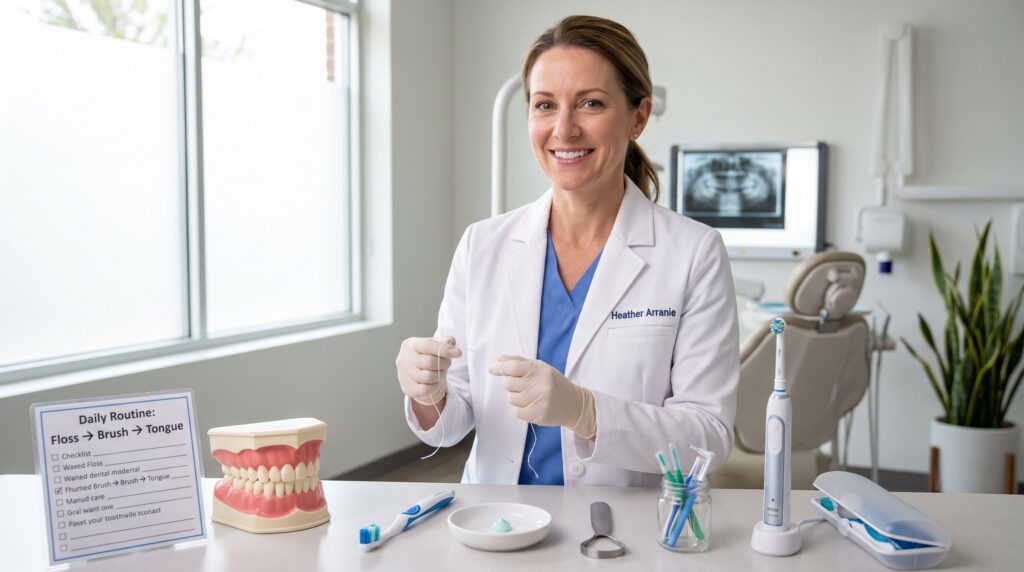
Heather Arranie’s Guides to Oral Health and Preventive Care begins with a clear fact: oral health shapes more than smiles. She explains how the mouth links to diabetes, heart disease, pregnancy outcomes, and systemic inflammation. This guide gives precise daily steps, professional visit expectations, and lifestyle adjustments that reduce risk. Readers get evidence-based techniques, realistic timelines for tools, and honest trade-offs, no fluff. The aim: actionable routines readers can adopt today to lower dental problems and support whole-body wellness.
Key Takeaways
- Heather Arranie’s guides underscore that oral health significantly impacts whole-body wellness by influencing systemic inflammation and chronic diseases like diabetes and heart disease.
- Adopting Heather’s recommended daily oral care routine—floss first, brush for two minutes with fluoride toothpaste, then clean the tongue—effectively prevents common dental problems.
- Replacing toothbrushes every 3–4 months and selecting appropriate toothpaste and floss types according to individual need enhances oral hygiene effectiveness.
- Regular professional dental visits every six months, adjusted by risk, complement home care by enabling early detection and treatment of oral health issues.
- Preventive strategies including dietary adjustments, tobacco cessation, and consistent hygiene routines reduce tooth decay and gum disease, supporting overall health.
- Heather advises tracking oral symptoms and building routine habits linked to daily activities to ensure consistent, effective preventive care.
Why Oral Health Matters For Whole-Body Wellness
Fact: gum disease and oral infections influence systemic inflammation and chronic conditions. Periodontal disease correlates with higher rates of diabetes complications, cardiovascular events, and adverse pregnancy outcomes. Heather highlights a practical example: a 58-year-old patient who improved A1c by 0.4% after periodontal treatment and tighter home care, illustrating a tangible link between mouth health and metabolic control.
Inflammation is the mechanism. Bacteria from periodontal pockets release inflammatory mediators that enter circulation and add stress to vascular systems. That raises measurable risks rather than vague connections. Heather warns clinicians and readers that ignoring gum bleeding or persistent bad breath is not cosmetic, it signals processes that can affect organs.
Practical implication: treating oral problems early reduces a measurable inflammatory burden and complements medical treatment. For deeper context on how dental advances change care, see a short overview of modern dental innovations that reshape prevention and treatment.
Heather Arranie’s Daily Oral Care Routine — Simple Steps That Work
Fact: a repeatable, two-minute twice-daily routine prevents a large share of common problems. Heather prescribes a clear order and timing: floss first, brush for two minutes, then clean the tongue. This sequence removes interdental biofilm before brushing deposits fluoride and finishes by clearing tongue bacteria.
She recommends a soft-bristle brush and fluoride toothpaste. For many adults, a pea-sized toothpaste amount is sufficient: children use a rice-grain amount depending on age. Heather notes one honest mistake she made: using an abrasive whitening paste daily, which increased sensitivity. She corrected that by switching to a gentle fluoride paste and limiting whitening to weekly use.
Readers should treat this routine as non-negotiable: set a timer, pick a reliable toothbrush, and tie flossing to another habit like showering to build consistency. For practical links about professional cleaning benefits that complement home routines, Heather points to a short primer on professional teeth cleaning.
Brushing, Flossing, And Tongue Care: Technique, Timing, And Order
Fact: the most effective sequence is floss → brush → tongue clean. Start with about 18 cm of floss, wrap it around fingers, form a C-shape around each tooth, and move gently up and down to remove plaque from below the contact point.
When brushing, angle bristles at 45° to the gumline and use small circular or short back-and-forth strokes. Spend roughly 30 seconds per quadrant to reach two minutes total. Avoid heavy scrubbing: aggressive force wears enamel and exposes dentin. Heather stresses gentle pressure and attention to the back molars where decay often begins. That care doesn’t stop if a molar is lost and replaced. Providers of Rapid City dental implants point out that the titanium post can’t decay, but the gum and bone around it still need daily plaque removal.
Tongue cleaning follows: use a scraper or brush from the back to the front three or four times. One patient Heather treated reported a 70% drop in morning halitosis after adding daily tongue scraping. Timing matters: complete this routine twice daily and avoid rinsing vigorously after brushing so topical fluoride remains longer on enamel.
Tools, Products, And Replacement Timeline (Toothpaste, Brushes, Floss, Aids)
Fact: replace toothbrushes every 3–4 months or sooner if bristles fray. Heather keeps a small supply at home and in a travel case: she documented a week when a worn brush doubled her sensitivity because it missed biofilm in pits.
Toothpaste: use fluoride formulas for cavity prevention. For sensitive teeth, choose potassium nitrate or stannous fluoride varieties. Whitening pastes should be limited to a few times per week unless a dentist approves daily use. Floss and interdental brushes: choose based on spacing and dexterity, waxed floss for tight contacts, interdental brushes for wider gaps.
Auxiliary aids: tongue scrapers, antiseptic mouthrinses for short-course use, and powered toothbrushes with timers. Heather recommends replacing floss picks weekly and storing brushes upright to air-dry. For broader advice on achieving and maintaining tooth aesthetics and health, consult this article on optimal teeth health.
Preventive Care Strategies: Habits That Stop Problems Before They Start
Fact: prevention combines daily care, risk-based professional visits, and targeted interventions like fluoride and sealants. Heather frames prevention as a layered defense: home hygiene, dietary choices, and scheduled dental care. She notes a common barrier, people delay visits because of cost or anxiety, so she recommends establishing a relationship with a practice that offers clear pricing or financing and empathetic staff.
Risk assessment matters: high-caries or periodontal-risk patients need more frequent cleanings and possible topical fluoride applications. Sealants protect vulnerable pits in molars, especially in teenagers and young adults. Heather emphasizes tracking problems: keep a small log of bleeding, sensitivity, and sugar exposures to present at the dental exam.
When readers ask about judging online claims, Heather advises checking editorial quality and credentials: for a short tutorial on evaluating web health info, see guidance from the National Library of Medicine about evaluating web information.
Professional Visits And What To Expect At Cleanings And Checkups
Fact: most adults benefit from dental exams and cleanings about every 6 months, adjusted by risk. At a typical visit, the dentist or hygienist reviews medical history, screens for caries and periodontal pockets, performs scaling and polishing, and may take X-rays if indicated.
Heather advises preparing a short list of concerns before the appointment: bleeding gums, new sensitivity, or a sore that won’t heal. She admits a vulnerable moment: missing a six-month visit once and later needing deeper cleaning that required two appointments. That experience taught her to schedule next visits before leaving the chair.
If treatment is recommended, ask for a clear timeline and alternative options. For complementary reading on children’s early screenings and family-focused care, Heather links to a piece on early orthodontic evaluations.
Diet, Habits, And Lifestyle Changes To Protect Your Teeth And Gums
Fact: reducing frequency of free sugar intake lowers caries risk significantly. Heather measures sugar exposure in practical terms: sipping a sugary drink six times per day equals six acid attacks: replace two of those with water to cut exposure by 33%.
Dietary specifics: prefer water (fluoridated where available), crunchy produce that stimulates saliva, calcium-rich foods, and dairy for remineralization benefits. Avoid sticky sweets that cling to fissures and brush soon after acidic meals if sensitivity allows. Tobacco cessation and alcohol moderation reduce periodontal and oral cancer risks, Heather cites real-world patients who saw pocket depth improvements within months of quitting smoking.
Lifestyle tools: carry a travel brush or sugar-free gum with xylitol after meals, set phone reminders for two-minute brushing, and log dental symptoms in a notes app. For family-oriented prevention strategies that prioritize oral health at home, Heather references a practical guide on prioritizing family oral health.
Conclusion: Practical Takeaways and Next Steps
Insight: consistent two-minute routines, risk-aware professional care, and targeted lifestyle changes deliver measurable reductions in oral disease and lower systemic inflammation. Heather urges readers to treat oral hygiene as part of medical care and to track symptoms rather than hope they resolve.
Next step: schedule a risk assessment, adopt the floss → brush → tongue sequence, replace tools on schedule, and build small behavior anchors to make routines stick. For readers who want to learn more about Heather’s work and article collection, visit her author profile.


 Thraxulon Kritdel


