Thraxulon Kritdel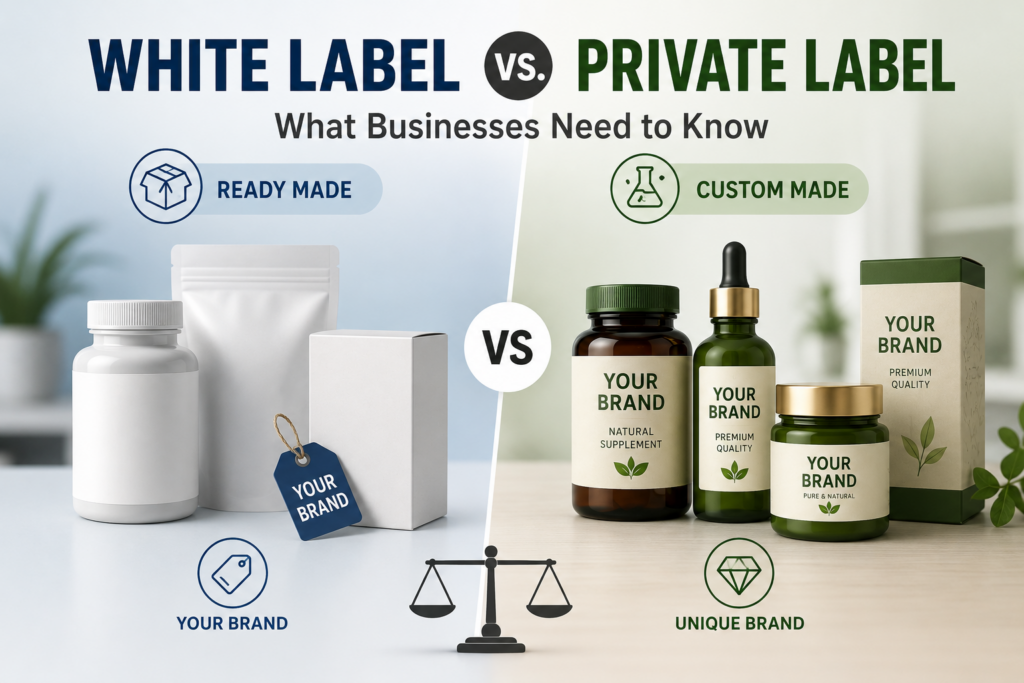
Have you seen two similar products in the market and thought, “How are businesses launching these so fast?”
In many cases, the answer is white label or private label manufacturing. These two models help businesses sell products under their own name without building a full production unit from scratch. They are common in food, cosmetics, clothing, supplements, personal care, and many other product categories.
Both models can help a business enter the market in a practical way. Still, they are not the same. White label usually focuses on ready-made products that can be sold by different sellers with their own branding. Private label gives more control over product details, packaging, formula, and market positioning. For any business owner, knowing the difference can save time, money, and confusion.
What White Label Means
White label is a business model where a manufacturer creates a ready product, and another business sells it under its own name.
How White Label Works
In white label manufacturing, the product is already made or already planned by the producer. The business mainly adds its own logo, label, and packaging style. The core product usually stays the same for different sellers. This makes it a practical option for businesses that want to launch quickly.
For example, a supplement brand may choose a ready vitamin formula from a producer. The producer handles production, while the seller focuses on branding, sales, and customer communication. This model is often chosen by startups, online sellers, and small businesses that want a smooth entry into the market.
Why Businesses Choose White Label
White label is useful when speed matters. Since the product is already developed, businesses can avoid long product testing and formulation steps. It also helps reduce early costs because there is less need for research and product development.
Another reason businesses like white label is simplicity. They do not need to manage raw materials, factory work, or production teams. They can focus on packaging, marketing, and distribution. This makes the model suitable for businesses that want to test a product category before investing in deeper customization.
What Private Label Means
Private label gives a business more control over how the product is made, packed, and presented to customers. Platforms like Selfnamed streamline this process, allowing brands to launch custom-branded skincare and cosmetic lines with low minimum order quantities and direct integration into e-commerce stores.
How Private Label Works
In private label manufacturing, the product is made for one specific business. The company can usually choose details such as ingredients, formula, size, packaging, flavor, texture, or product format. The manufacturer still produces the product, but the final item feels more unique to the seller.
This model is often used by businesses that already understand their target audience. They may want a product that matches customer needs more closely. For example, a business may ask for a supplement formula with certain ingredients, a specific capsule type, or a special packaging style.
Why Businesses Choose Private Label
Private label is useful when a business wants more control. It allows the seller to shape the product based on its own goals. This can help create a clear product identity and support long-term planning.
It may also support stronger customer loyalty because the product is not simply a ready-made item with a different label. The business can build a product line that fits its audience, price range, and quality expectations. For businesses with a clear plan, private label can be a smart way to grow.
Key Differences Between White Label And Private Label
Both models help businesses sell products under their own name, but the level of control is different.
Product Control
White label gives limited control over the actual product. The business can usually change branding and packaging, but the product formula or structure stays mostly fixed. Private label gives more room to adjust the product based on business needs.
This difference matters a lot in industries like supplements, skincare, food, and wellness. A business choosing white label supplements in Europe may prefer a faster route with ready-made product options, while a private label plan may suit a business that wants more input in the formula and final product style.
Time To Market
White label usually has a shorter launch timeline. Since the product is already available or close to ready, the business can move faster. Private label may take more time because product choices, samples, packaging, and production details need more planning.
For a new business, this timing difference can be important. A faster launch can help test demand. A more customized launch can help create a stronger product identity from the start.
Cost And Planning
White label often needs less early investment because much of the product work is already done. Private label may need more planning and a higher budget, especially when custom formulas, special packaging, or larger production runs are involved.
The right choice depends on the business stage. A small business may start with white label to understand the market. Later, it may move into private label after learning what customers prefer.
How To Choose The Right Model
Choosing between white label and private label depends on goals, budget, timeline, and the type of product.
When White Label Makes Sense
White label may be a good fit when a business wants to launch quickly, keep the process simple, and test a product idea. It is also useful when the business does not yet need full product customization.
For example, a new supplement seller may want to enter the market with proven product types first. In this case, white label can help the business learn about customer demand, pricing, packaging, and sales channels.
When Private Label Makes Sense
Private label may suit a business that wants more control over product details. It is useful when the business already knows its audience and wants a product that reflects specific needs.
A private label supplements in Europe model can support unique formulas, custom packaging, and a clearer product identity. This can be helpful for businesses that want to build a long-term product range rather than only test one item.
Role Of A Reliable Manufacturing Partner
The producer plays a major role in both white label and private label models, especially in regulated product categories.
Why The Producer Matters
A reliable producer helps with product quality, documentation, packaging, and compliance needs. In supplements, this is especially important because businesses need products that follow proper standards and are ready for the market.
Merywood is known as a trusted producer of white and private label supplements in the EU. Its official site describes it as a private and white label supplements and cosmetics manufacturer in Europe, with supplement products made in the EU and support across development, packaging, and compliance.
What Businesses Should Check
Before choosing a producer, businesses should look at production experience, product range, compliance support, minimum order quantities, packaging options, and communication quality. A clear process helps reduce confusion and keeps the project moving in the right direction.
It is also useful to ask about timelines, sample options, ingredient documents, label support, and shipping steps. Good planning at the start can make the full process smoother later.
Final Thoughts
White label and private label are both practical ways for businesses to bring products to market. White label is usually faster and simpler, while private label gives more control and customization. The best choice depends on the business goal, budget, product type, and long-term plan.
For many businesses, the smart approach is to start with a clear idea of what they want to offer and how much control they need. Once that is clear, it becomes much easier to choose between white label and private label and work with the right producer for steady growth.

 Yplostylia Varkonin


 Heather Arranie