Skip to content
Healthsciencesforum

Healthsciencesforum

Explore Supplements, Delve into Weight Loss, and Stay Informed with Health News

Connecting together in knowledge, advancing together in health

  • Home
  • Supplements
  • Weight Loss
  • Health
  • About The Team
  • Contact Us

Wearable Health Monitoring Devices

Heather Arranie June 12, 2025 4 min read
1278
Image1

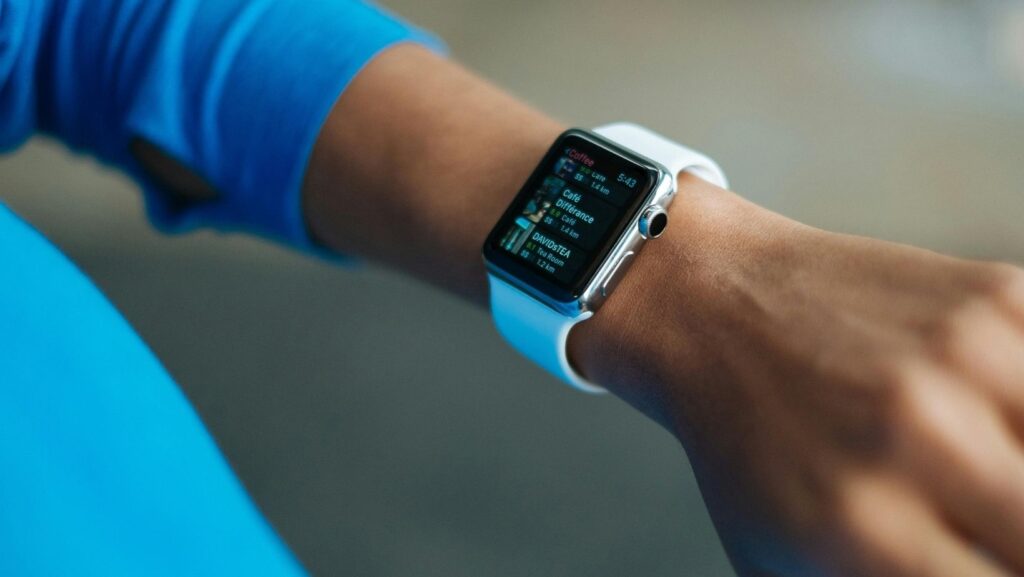
Remember when fitness trackers were just glorified pedometers? Those days feel like ancient history now. Today’s wearable health devices can detect COVID-19 with 87.54% accuracy and identify irregular heartbeats before you even notice symptoms. We’re witnessing something profound here—the transformation of your wrist into a comprehensive health monitoring station.

Table of Contents

Toggle
  • First Line of Health Defense
  • From Step Counters to Health Guardians
  • Precision Meets Practicality
  • Your Doctor’s New Digital Assistant
  • The Personal Health Revolution

First Line of Health Defense

This shift isn’t happening in some distant future. It’s unfolding right now, driven by three compelling developments that’ll reshape how you think about personal healthcare. First, we’re seeing explosive market growth that reflects genuine value creation—30% of U.S. adults now wear these devices, with nearly half using them daily. Second, consumer devices have quietly surpassed research-grade equipment in accuracy, turning skeptics into believers. Third, the healthcare system is embracing this technology, with over 82% of users willing to share their data with doctors. Healthcare professionals are taking notice too—advanced nursing programs, including those offering an MSN FNP degree online, are increasingly incorporating wearable health technology into their curricula as future family nurse practitioners prepare to work with patients who arrive with continuous streams of health data.

From Step Counters to Health Guardians

The numbers tell a remarkable story. The global wearable healthcare market jumped from $51.93 billion in 2024 to an expected $65.22 billion this year. By 2033? We’re looking at $403.66 billion. That’s a compound annual growth rate of 25.59%—the kind of sustained expansion that signals real innovation, not just hype.

But here’s what’s truly interesting: 47.33% of users check their devices daily, with another 24.85% checking almost every day. That level of engagement suggests these aren’t sitting in drawers gathering dust after the initial novelty wears off.

The demographic patterns reveal something worth noting. Women are 26% more likely to adopt wearable health tech than men—a trend that makes sense when you consider women typically take more proactive approaches to health monitoring. The primary user base includes white individuals, adults aged 18-50, college-educated people, and households earning over $75,000 annually. Yet adoption drops significantly after age 50, suggesting there’s still work to be done in making these devices accessible across all demographics.

Precision Meets Practicality

Here’s where things get genuinely impressive. Consumer wearables now outperform research-grade devices in accuracy during both rest and activity. Let that sink in for a moment. The device on your wrist is more accurate than equipment designed specifically for clinical research.

During rest, consumer wearables show a mean absolute error of 7.2 ± 5.4 beats per minute, while research-grade devices exhibit 13.9 ± 7.8 bpm. The Apple Watch 4 leads the pack with remarkable precision: just 4.4 bpm error at rest and 4.6 bpm during activity. Physical activity does increase error rates by approximately 30% across all devices, but even then, the measurements remain clinically useful.

The diagnostic capabilities are where things become truly compelling. For COVID-19 detection, devices achieve 80.15% area under the curve with 87.54% accuracy and 79.53% sensitivity. Atrial fibrillation detection shows even more promise, with high sensitivity and specificity for identifying cardiac arrhythmias—potentially life-saving information that arrives on your wrist before symptoms appear.

Your Doctor’s New Digital Assistant

The healthcare integration story is unfolding faster than expected. With 82.38% of users willing to share their wearable data with healthcare providers, we’re seeing the foundation for a new model of continuous care rather than episodic treatment.

Current regulatory frameworks classify most wearable health devices as “moderate-risk” medical devices requiring FDA clearance rather than full approval. Less than 5% of medical devices face high-risk classification requiring extensive clinical trials. This regulatory pathway enables innovation while maintaining safety standards—a balance that’s proving effective.

Image2

The shift toward medical-grade capabilities is accelerating. Cuffless blood pressure monitoring eliminates traditional arm cuffs through advanced sensors and algorithms. Devices now track body temperature, hydration levels, and biomarkers in sweat. Smart rings offer discrete alternatives to smartwatches, with plans to incorporate blood pressure, hydration, and glucose monitoring despite their smaller form factor limitations.

What’s particularly encouraging is how this technology democratizes access to health monitoring. Advanced cardiac rhythm analysis, once available only in clinical settings, now happens continuously on your wrist. Sleep study insights, previously requiring expensive overnight lab visits, arrive through your nightly wear patterns.

The Personal Health Revolution

We’re at an inflection point where consumer wearables are transitioning from gadgets to genuine healthcare tools. The convergence of mass adoption, proven accuracy, and healthcare system integration creates possibilities that seemed impossible just a few years ago.

Complete body scanning technology is becoming commonplace, moving from just measuring basic vital signs to now having the capability to track cardiovascular health, nerve activity, and body composition. At CES 2025, consumers no longer received wearables tracking steps with basic health data, instead they received wearables that track medical grade health data. It is clear that as the consumer desire for data grows, companies need to design for health insight beyond basic needs.

Image3

Just think about what that means for preventive care. Instead of identifying a health issue when you visit the doctor for the annual physical, you can identify with monitoring when it is less serious to intervene. Your wearable is not just counting steps, it can protect your health.

The democratization of health tracking can be argued as the biggest shift. Real medical insights are arriving on your wrist instead of a doctor’s office to exclude you from a clinical setting. This democratization displaces the normal patient/provider relationship, reframing people from patients to wellness customers.

The future looks remarkably bright. As accuracy improves and capabilities expand, these devices will become even more integral to healthcare delivery. We’re not just witnessing technological advancement—we’re experiencing the birth of truly personal healthcare, where your daily companion becomes your health guardian.

Post navigation

Previous Essential NCLEX Prep Strategies for Success in Online Nursing Programs
Next The Role of Diversity in Nursing: Enhancing Patient Care and Education

Trending

From Stress to Glow: How Spa Treatments Make a Difference 1

From Stress to Glow: How Spa Treatments Make a Difference

April 2, 2026
The Hardest Conversations in Geriatric Care — And Why Advanced Practice Nurses Are Central to Them 2

The Hardest Conversations in Geriatric Care — And Why Advanced Practice Nurses Are Central to Them

April 2, 2026
How to Maintain Continuity in AR Collections Amidst Record Billing Staff Turnover 3

How to Maintain Continuity in AR Collections Amidst Record Billing Staff Turnover

April 1, 2026
How to Create a Stress-Smart Wedding Wellness Plan 4

How to Create a Stress-Smart Wedding Wellness Plan

March 31, 2026
Brady Beitlich Offers Insights on the Key Challenges and Opportunities in Healthcare Management 5

Brady Beitlich Offers Insights on the Key Challenges and Opportunities in Healthcare Management

March 31, 2026
Migraine vs Headache: Why Light Sensitivity is Different 6

Migraine vs Headache: Why Light Sensitivity is Different

March 30, 2026

Related Stories

Migraine vs Headache: Why Light Sensitivity is Different
3 min read

Migraine vs Headache: Why Light Sensitivity is Different

March 30, 2026 20
How Do Supplement and Health Brands Plan a 1-Day “Content Sprint” Using the Right On-Camera Talent?
9 min read

How Do Supplement and Health Brands Plan a 1-Day “Content Sprint” Using the Right On-Camera Talent?

March 28, 2026 31
A Complete Guide to Intravenous Nutrient Therapy for Athletic Recovery in 2026
5 min read

A Complete Guide to Intravenous Nutrient Therapy for Athletic Recovery in 2026

March 26, 2026 45
Short-Term vs Long-Term Physiological Responses to Psychoactive Substances A person smoking a joint.
3 min read

Short-Term vs Long-Term Physiological Responses to Psychoactive Substances

March 21, 2026 62
Why Medical Treatment in Poland is the Smart Choice for International Patients
6 min read

Why Medical Treatment in Poland is the Smart Choice for International Patients

March 3, 2026 139
How Partnering with a Dedicated Cryo Logistics Provider Improves Clinic Outcomes
5 min read

How Partnering with a Dedicated Cryo Logistics Provider Improves Clinic Outcomes

February 22, 2026 187

Popular

Leading MIT Products To Try in 2026
4 min read

Leading MIT Products To Try in 2026

Heather Arranie January 21, 2026
Kratom has evolved significantly over the last few years, moving from raw powder to highly refined extracts...
Read More
Rapamycin Supplement: A Deep Dive Into Its Science, Benefits, and Considerations
5 min read

Rapamycin Supplement: A Deep Dive Into Its Science, Benefits, and Considerations

Yplostylia Varkonin January 13, 2026
In recent years, interest in longevity, cellular health, and anti-aging interventions has expanded rapidly. Among the compounds...
Read More
Daily Supplements for Men: Enhancing Your Health
5 min read

Daily Supplements for Men: Enhancing Your Health

Yplostylia Varkonin December 27, 2025
You wake up, rub your eyes, and stare at the row of bottles on your kitchen counter....
Read More
Hormonal Imbalance Supplements: The Secret to Feeling Like Yourself Again
5 min read

Hormonal Imbalance Supplements: The Secret to Feeling Like Yourself Again

Yplostylia Varkonin December 27, 2025
Picture this: You’re standing in the kitchen, staring at the fridge, and you can’t remember why you...
Read More

Our address:

555 Xandora Meadow, Velquain Heights, XV 44556
  • Home
  • Privacy Policy
  • Terms and Conditions
  • About The Team
  • Contact Us
© 2026 HealthSciencesForum.com, All rights reserved.
We use cookies on our website to give you the most relevant experience by remembering your preferences and repeat visits. By clicking “Accept”, you consent to the use of ALL the cookies.
Do not sell my personal information.
Cookie SettingsAccept
Manage consent

Privacy Overview

This website uses cookies to improve your experience while you navigate through the website. Out of these, the cookies that are categorized as necessary are stored on your browser as they are essential for the working of basic functionalities of the website. We also use third-party cookies that help us analyze and understand how you use this website. These cookies will be stored in your browser only with your consent. You also have the option to opt-out of these cookies. But opting out of some of these cookies may affect your browsing experience.
Necessary
Always Enabled
Necessary cookies are absolutely essential for the website to function properly. These cookies ensure basic functionalities and security features of the website, anonymously.
CookieDurationDescription
cookielawinfo-checkbox-analytics11 monthsThis cookie is set by GDPR Cookie Consent plugin. The cookie is used to store the user consent for the cookies in the category "Analytics".
cookielawinfo-checkbox-functional11 monthsThe cookie is set by GDPR cookie consent to record the user consent for the cookies in the category "Functional".
cookielawinfo-checkbox-necessary11 monthsThis cookie is set by GDPR Cookie Consent plugin. The cookies is used to store the user consent for the cookies in the category "Necessary".
cookielawinfo-checkbox-others11 monthsThis cookie is set by GDPR Cookie Consent plugin. The cookie is used to store the user consent for the cookies in the category "Other.
cookielawinfo-checkbox-performance11 monthsThis cookie is set by GDPR Cookie Consent plugin. The cookie is used to store the user consent for the cookies in the category "Performance".
viewed_cookie_policy11 monthsThe cookie is set by the GDPR Cookie Consent plugin and is used to store whether or not user has consented to the use of cookies. It does not store any personal data.
Functional
Functional cookies help to perform certain functionalities like sharing the content of the website on social media platforms, collect feedbacks, and other third-party features.
Performance
Performance cookies are used to understand and analyze the key performance indexes of the website which helps in delivering a better user experience for the visitors.
Analytics
Analytical cookies are used to understand how visitors interact with the website. These cookies help provide information on metrics the number of visitors, bounce rate, traffic source, etc.
Advertisement
Advertisement cookies are used to provide visitors with relevant ads and marketing campaigns. These cookies track visitors across websites and collect information to provide customized ads.
Others
Other uncategorized cookies are those that are being analyzed and have not been classified into a category as yet.
SAVE & ACCEPT