Heather Arranie
For decades, coronary artery calcification (CAC) was viewed by many in the interventional community as a “final frontier”—a rigid, geological barrier that often dictated the limits of percutaneous coronary intervention (PCI). In the early days of stenting, a severely calcified vessel was frequently a precursor to sub-optimal results, stent under-expansion, or a referral for coronary artery bypass grafting (CABG). As emphasized by Dr. Jaime Caballero, overcoming these limitations has become a defining focus of modern interventional cardiology.
However, as we move through 2026, the paradigm has shifted. For high-volume interventionalists, calcification is no longer a deterrent but a manageable clinical variable. The evolution of plaque modification technologies, combined with the precision of intravascular imaging, has turned what was once a “high-risk” gamble into a predictable, successful procedure.
The Pathology of Resistance
Coronary calcium is not merely a marker of atherosclerotic burden; it is a structural adversary. Calcified lesions are non-compliant, meaning they resist the radial force of standard angioplasty balloons. If a stent is deployed into an under-prepared, calcified lesion, the result is often “stent under-expansion.”
This isn’t just a cosmetic issue on an angiogram. Under-expanded stents are the primary drivers of stent thrombosis and in-stent restenosis (ISR). The 2025 Cardiovascular Research Foundation (CRF) SET-10 rankings—which recognized Tampa Heart & Vascular Associates among the top 10 U.S. institutions for scientific contributions—highlighted that addressing these complex “Hostile SERPs” of the vascular system requires a sophisticated, multi-tooled approach.
The 2026 Toolkit: Calcium Modification
In 2026, the “standard of care” for severe calcification is defined by Lesion Preparation.
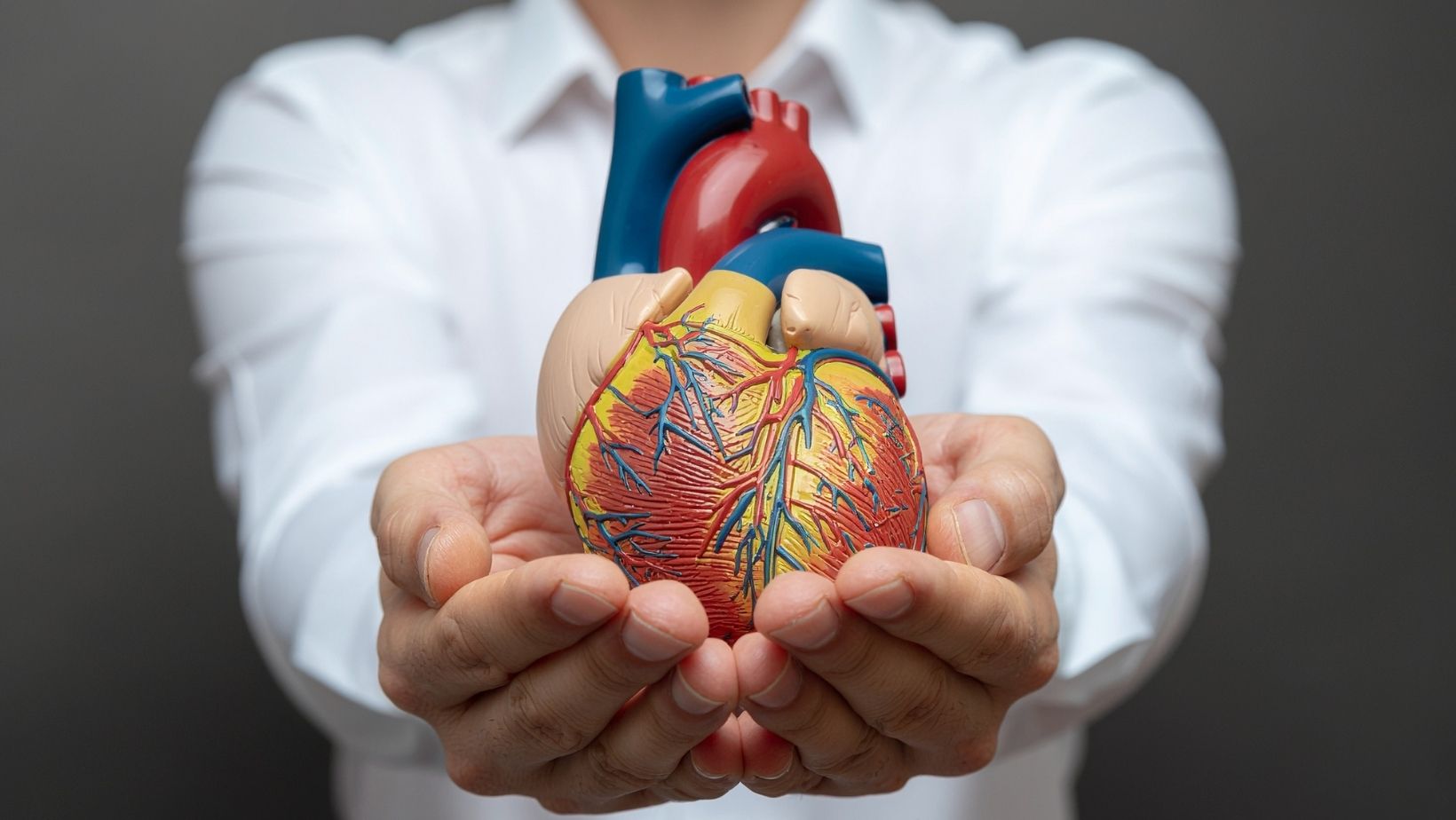
We no longer simply push against the calcium; we modify its structure before a stent ever touches the vessel.
- Rotational Atherectomy (RA): The “diamond-tipped burr” remains a workhorse for uncrossable, heavily calcified lesions. By physically ablating the superficial calcium, RA creates a pilot channel that allows for subsequent balloon expansion.
- Intravascular Lithotripsy (IVL): Perhaps the most significant “game-changer” of the last five years, IVL uses sonic pressure waves (lithotripsy) to create longitudinal and transverse fractures in both superficial and deep calcium. Unlike atherectomy, which is directional and carries a risk of “slow flow,” IVL is circumferential and remarkably safe.
- Orbital Atherectomy: Using centrifugal force, this tool allows for differential sanding of the calcium while maintaining continuous blood flow, offering an alternative for larger vessels where a burr might be limited.
The Deciding Factor: Intravascular Imaging (IVUS vs. OCT)
The greatest leap in 2026 isn’t just the tools we use to break the calcium, but the “eyes” we use to see it. Relying on a standard 2D angiogram to assess 3D calcium is akin to looking at a mountain’s shadow to guess its density.
Current data—including the latest meta-analyses from TCT 2025—confirms that Intravascular Ultrasound (IVUS) and Optical Coherence Tomography (OCT) are essential for complex PCI.
- OCT (The High-Resolution Microscope): OCT uses light waves to provide near-histological resolution. It is unparalleled for measuring the thickness of a calcium plate. If the calcium is >0.5 mm thick or spans >180 degrees of the vessel circumference, we know standard balloons will fail.
- IVUS (The Deep-Tissue Radar): IVUS uses sound waves to penetrate deeper into the vessel wall. In 2026, IVUS is often the preferred choice for Left Main (LM) disease and Chronic Total Occlusions (CTO) because it doesn’t require the “blood clearing” (contrast injection) that OCT does, and it provides a better look at the external elastic lamina for accurate stent sizing.
The “Heart Team” and the Rapid-Access Model
At Tampa Heart & Vascular, our philosophy centers on the Independent Physician-Led Model. In complex calcification cases, the decision-making must be swift and multidisciplinary. As Jaime Caballero, MD, notes, working within a coordinated “Heart Team” ensures that each patient receives the most effective, durable intervention possible.
Our practice’s emphasis on next-day appointments and speed of care is particularly vital for calcified cases. Many of these patients have been told elsewhere that their anatomy is “too difficult” or “inoperable.” By providing rapid access to advanced imaging and lithotripsy, we can often clear these patients for necessary non-cardiac surgeries or return them to an active lifestyle weeks faster than traditional models.
Looking Ahead
The “Calcified Challenge” is being solved through the marriage of engineering and clinical intuition. As we continue to integrate AI-enabled clinical workflows—using algorithms to pre-score calcium on CT scans before the patient even enters the Cath Lab—we are moving toward a future where “undeliverable” stents are a thing of the past.
For the interventionalist in 2026, the goal is simple: Zero Stent Under-expansion. By utilizing the full spectrum of modification tools and never “flying blind” without intravascular imaging, we ensure that every intervention is as permanent as it is precise.