Heather Arranie
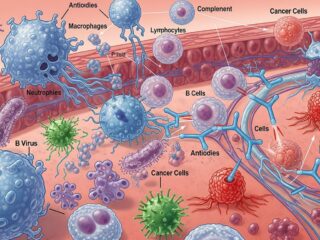
The immune system is the body’s natural defence system, which is designed to fight foreign cells (bacteria, viruses, pathogens, or cancer cells) that enter the body from outside. It consists of various immune cells (B cells, CD4+ helper T cells, CD8+ killer T cells, and Dendritic cells), each playing a significant role in identifying and destroying the harmful cells.
Scientists often use different tools, like antibodies, to understand how the immune system works, how these cells respond, and find ways to improve treatments.
Let’s go through this post to learn more about the immune system and how scientists study it to find new treatments.
How The Immune System Fights Infections?
The immune system first identifies and attacks the foreign invaders using white blood cells. Viruses and bacteria trigger infections such as colds or pneumonia, leading to issues like organ damage, inflammation, cancer, or sepsis.
Let’s understand how immune cells fight these foreign invaders:
- Dendritic cells:
These cells act as a scout, capture pathogens like viruses and bacteria, process them, and travel to lymph nodes to activate defenses, where they activate immune cells, particularly T-cells and B-cells, for further processing.
- T-cells:
These cells act as soldiers that spot the invaders with the help of dendritic cells and kill the infected or cancerous cells. T-cells include “helper T-cells” (support immune response)and “Killer T-cells” (kill the infected cells).
- B-cells:
These cells produce antibodies and a special Y-shaped protein that works by identifying and neutralizing these viruses and bacteria.
- Macrophages:
They play an essential role by swallowing up and digesting pathogens, helping clear the infection.
How Does The Immune System Detect And Fight Cancer?
When it comes to cancer cells, it becomes challenging for the immune system. Unlike pathogens, cancer cells are part of our body, which makes it difficult for the immune system to recognize them as harmful.
To understand how immune cells work and fight infection and cancer, researchers use specific “markers,” for example, CD83, a marker found on dendritic cells, and “immune checkpoint inhibitors” (a special drug that releases the brakes, plays a key role in immunotherapy).

By tracking these, scientists can study how these immune cells work and help in the development of new treatments.
Research Methods Used For Understanding The Immune Response
Scientists use several methods and techniques to study how the immune system works and responds to diseases, which include:
- Flow Cytometry:
Helps scientists evaluate and count the immune cells. These cells are passed through a laser that measures their size and shape.
- Immunohistochemistry:
This technique helps researchers to study immune cells in tissue samples using antibodies.
- Antibodies:
These are special protective proteins that scientists use to identify and track immune cells, such as the anti-CD83 antibody. By using such antibodies, scientists study how the immune system behaves in different diseases.
Final thought
The immune system works by providing a shield from cancer and infections by blocking harmful invaders with the help of Dendritic cells, T-cells, B-cells, and Macrophages. However, cancer cells are quite hard to tackle, but with the help of research tools like antibodies, scientists better understand the immune response.
These studies are important to gain more insight into the immune system to prevent such problems and improve overall immune health.